
Key Takeaways
- CLV measures the total revenue a customer generates over their entire relationship with your business.
- Tracking CLV helps you measure where your growth is sustainable, not just whether your last campaign worked.
- Use the basic CLV formula to get a usable baseline fast: CLV = Average Purchase Value × Purchase Frequency × Customer Lifespan.
- CLV delivers greater value when combined with other factors. For example, comparing CLV to customer acquisition cost (CAC) can give you a clearer picture of business health.
- One of the fastest ways to grow CLV is retention-focused marketing. That means building more engagement points through tactics like targeted segmentation, subscription incentives, and referral programs.
Customer lifetime value (CLV) is the revenue a customer is likely to generate over their entire relationship with your business. In marketing, it’s one of the few numbers that tells you whether your growth is sustainable.
A campaign can hit its numbers and still lose money, but if you’re only measuring clicks or first purchases, you won’t see it happening.
CLV forces you to ask better questions:
- Are you keeping them?
- Are you increasing repeat purchases and profit margins over time?
- Are you attracting the right customers?
Here’s the simplest way to think about it. If your average customer sticks around for three years and buys four times a year, your marketing should be built around keeping that relationship going, not just getting the first sale.
Smile.io research shows that the longer customers shop with a brand, the more they spend per order. In beauty and cosmetics alone, shoppers buy 45% more per order after three years than they did at the start of the relationship.
In this post, we’ll break down what CLV means, how to calculate it, what impacts it most, and how you can use it to your advantage.
One of the fastest ways to grow CLV is retention-focused marketing. That means building more engagement points through tactics like targeted segmentation, subscription incentives, and referral programs.
What Is CLV? in Marketing
CLV is the total revenue you can expect from a customer over the course of their relationship with your brand.
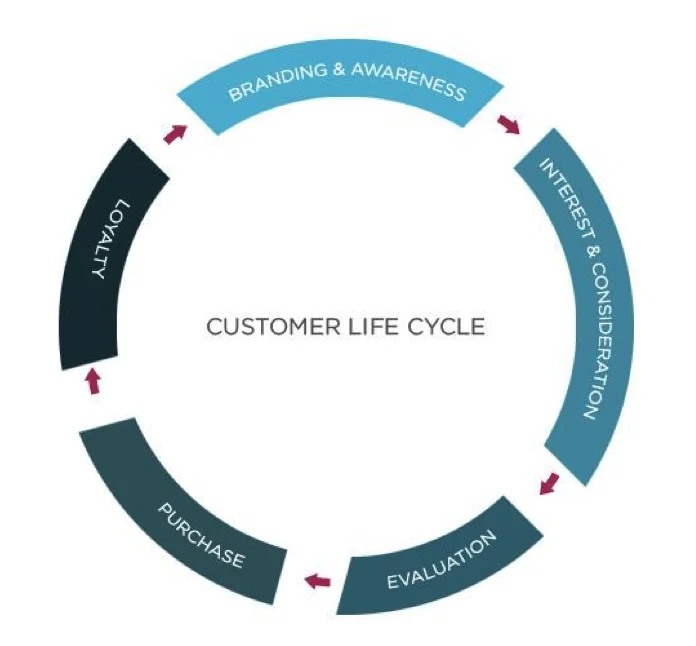
That’s why CLV is a core marketing metric. It connects top-of-funnel work (such as ads, content, offers, and landing pages) to what really drives sustainable growth, which is retention and expansion. But only 37 percent of organizations are using CLV strategically, according to Forrester research. This means most marketers are missing out on its value.
CLV Is a Long-Term Growth Metric, Not a Vanity Metric, Marketing
A campaign can “win” on clicks or first purchases and still be a bad business decision.
For example, that campaign may lead to:
- Discount buyers who disappear after the promo
- Cheap leads that never become repeat customers
- One-time purchases with no follow-up behavior
CLV exposes those patterns. If CLV is low, it means your customers aren’t sticking around. If CLV is rising, you can tell the leads, offers, and growth strategies you’re implementing are starting to work.
CLV Can Be Revenue- or Profit-Based
Most teams start with revenue CLV because it’s simple. It’s the average customer’s lifetime spend.
Profit CLV is stricter (and can be more useful). It’s the average profit the customer generates after costs. If margins vary by product, profit CLV gives you a cleaner view of what’s worth scaling.
CLV Helps You Make Better Marketing Decisions Marketing
With CLV, you can answer:
- Which channels bring customers who stick
- Which offers attract long-term buyers vs. deal hunters
- How much you can afford to pay in CAC and stay profitable
Having concrete, data-driven answers to these questions helps you get more of the right customers and keep them.
Why CLV Matters
CLV is one of the cleanest ways to measure customer loyalty because it shows what a customer spends over time, not just what happened after their first click or their biggest purchase.
How do you calculate customer lifetime value (CLV)?
Start with the basic CLV formula: CLV = Average Purchase Value × Purchase Frequency × Customer Lifespan. Pull average order value from your analytics, estimate how many times the average customer buys per year, and multiply by how many years they typically stay. Use round numbers first. Once you have a baseline, compare CLV across campaigns to see what drives profitable growth.
Why is customer lifetime value (CLV) important?
CLV tells you how much you can afford to spend to acquire a customer and still make money. Without it, you can scale campaigns that look “successful” but lose profit after discounts, churn, and support costs. When you understand CLV, you can prioritize retention and focus time and resources on the channels that bring customers who stick.
How can you increase customer lifetime value (CLV)?
The fastest lever is retention. Focus on understanding what keeps your best customers coming back, then build systems around it. That means personalizing your outreach so it feels relevant, creating engagement points that give customers reasons to return, and making the experience smooth enough that they never have a reason to leave.